Wednesday, 17 October 2012

Origins


The Renaissance was a cultural movement that profoundly affected European intellectual life in the early modern period. Beginning in Italy, and spreading to the rest of Europe by the 16th century, its influence was felt in literature, philosophy, art, music, politics, science, religion, and other aspects of intellectual inquiry. Renaissance scholars employed the humanist method in study, and searched for realism and human emotion in art.


Many argue that the ideas that characterized the Renaissance had their origin in late 13th century Florence, in particular with the writings of Dante Alighieri (1265–1321) and Francesco Petrarca (1304–1374), as well as the painting of Giotto di Bondone (1267–1337). Some writers date the Renaissance quite precisely; one proposed starting point is 1401, when the rival geniuses Lorenzo Ghiberti and Filippo Brunelleschi competed for the contract to build the bronze doors for the Baptistery of the Florence Cathedral (Ghiberti won). Others see more general competition between artists and polymaths such as Brunelleschi, Ghiberti, Donatello, and Masaccio for artistic commissions as sparking the creativity of the Renaissance. Yet it remains debated why the Renaissance began in Italy, and why it began when it did.

Accordingly, several theories have been put forward to explain its origins.
During the Renaissance, money and art went hand in hand. Artists depended totally on patrons while the patrons needed money to sustain geniuses. Wealth was brought to Italy in the 14th, 15th, and 16th centuries by expanding trade into Asia and Europe. Silver mining in Tyrol increased the flow of money. Luxuries from the Eastern world, brought home during the Crusades, increased the prosperity of Genoa and Venice.

Social and political structures in Italy
The unique political structures of late Middle Ages Italy have led some to theorize that its unusual social climate allowed the emergence of a rare cultural efflorescence. Italy didn't exist as a political entity in the early modern period. Instead it was divided into smaller city states and territories; the Kingdom of Naples controlled the south, the Republic of Florence and the Papal States at the center, the Milanese and the Genoese to the north and west respectively, and the Venetians to the east. Fifteenth-century Italy was one of the most urbanized areas in Europe. Many of its cities stood among the ruins of ancient Roman buildings; it seems likely that the classical nature of the Renaissance was linked to its origin in the Roman Empire's heartland.

Historian and political philosopher Quentin Skinner points out that Otto of Freising (c. 1114–1158), a German bishop visiting north Italy during the 12th century, noticed a widespread new form of political and social organization, observing that Italy appeared to have exited from Feudalism so that its society was based on merchants and commerce. Linked to this was anti-monarchical thinking, represented in the famous early Renaissance fresco cycle Allegory of Good and Bad Government in Siena by Ambrogio Lorenzetti (painted 1338–1340) whose strong message is about the virtues of fairness, justice, republicanism and good administration. Holding both Church and Empire at bay, these city republics were devoted to notions of liberty. Skinner reports that there were many defenses of liberty such as Matteo Palmieri's (1406–1475) celebration of Florentine genius not only in art, sculpture and architecture, but "the remarkable efflorescence of moral, social and political philosophy that occurred in Florence at the same time".
Even cities and states beyond central Italy, such as the Republic of Florence at this time, were also notable for their merchant Republics, especially the Republic of Venice. Although in practice these were oligarchical, and bore little resemblance to a modern democracy, they did have democratic features and were responsive states, with forms of participation in governance and belief in liberty. The relative political freedom they afforded was conducive to academic and artistic advancement. Likewise, the position of Italian cities such as Venice as great trading centers made them intellectual crossroads. Merchants brought with them ideas from far corners of the globe, particularly the Levant. Venice was Europe's gateway to trade with the East, and a producer of fine glass, while Florence was a capital of textiles. The wealth such business brought to Italy meant large public and private artistic projects could be commissioned and individuals had more leisure time for study

Tuesday, 16 October 2012

The Renaissance

The Renaissance comes from the French word meaning "to be reborn" was a cultural movement that spanned roughly from the 14th to the 17th century, beginning in Italy in the Late Middle Ages and later spreading to the rest of Europe. Though availability of paper and the invention of metal movable type sped the dissemination of ideas from the later 15th century, the changes of the Renaissance were not uniformly experienced across Europe. As a cultural movement, it encompassed innovative flowering of Latin and vernacular literatures, beginning with the 14th-century resurgence of learning based on classical sources, which contemporaries credited to Patriarch, the development of linear perspective and other techniques of rendering a more natural reality in painting, and gradual but widespread educational reform. In politics the Renaissance contributed the development of the conventions of diplomacy, and in science an increased reliance on observation. Although the Renaissance saw revolutions in many intellectual pursuits, as well as social and political upheaval, it is perhaps best known for its artistic developments and the contributions of such polymaths as Leonardo da Vinci and Michelangelo, who inspired the term "Renaissance man".

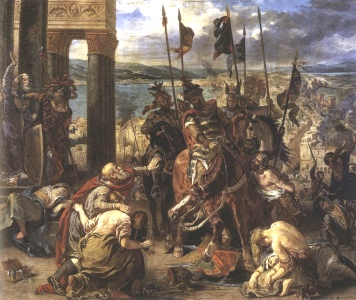
There is a consensus that the Renaissance began in Florence, Italy, in the 14th century. Various theories have been proposed to account for its origins and characteristics, focusing on a variety of factors including the social and civic peculiarities of Florence at the time; its political structure; the patronage of its dominant family, the Medici and the migration of Greek scholars and texts to Italy following the Fall of Constantinople at the hands of the Ottoman Turks.

The Renaissance has a long and complex historiography, and in line with general scepticism of discrete periodizations, there has been much debate among historians reacting to the 19th-century glorification of the "Renaissance" and individual culture heroes as "Renaissance men", questioning the usefulness of Renaissance as a term and as a historical delineation. The art historian Erwin Panofsky observed of this resistance to the concept of Renaissance.

It is perhaps no accident that the factuality of the Italian Renaissance has been most vigorously questioned by those who are not obliged to take a professional interest in the aesthetic aspects of civilization but only exceptionally by students of literature and hardly ever by historians of Art.

Some have called into question whether the Renaissance was a cultural "advance" from the Middle Ages, instead seeing it as a period of pessimism and nostalgia for the classical age, while social and economic historians of the longue durée especially have instead focused on the continuity between the two eras, linked, as Panofsky himself observed, "by a thousand ties".

The word Renaissance has also been extended to other historical and cultural movements, such as the Carolingian Renaissance and the Renaissance of the 12th century.

Specifying the Idea


After doing a quick recap on our worlds past history and looking at a few existing characters I have decided to place Aquaman and Scarecrow in the Middle ages, but more specifically during the renaissance. I have come up with the idea that Scarecrow was responsible  for the black plague in Europe and how he tried an experiment on rats. I have also decided to use Aquaman as he can be my hero and reason as to how Venice became flooded.
I will now go into further depth and research everything that is important towards that era. I will also have to look into the black plague including the symptoms. I will look into the clothes and lifestyle of the Italian renaissance since in making these characters live in Italy. Also I have slightly mentioned these characters and gone through their back stories but now I will have to go into more depth about how they are portrayed so that way I can get an accurate design on the characters.    

Monday, 15 October 2012

Possible story twists

After looking at some of our past history during each time period I came up with some ideas as to what could be a possible alteration of what could happen in our history and by using the information of existing characters by merging them.
Also as I am unclear and unsure of what idea I am doing I have gone through some ideas and ran them past other students to see which they think would be fun to look at or re-imagine.

*Blue Beetle vs Catwoman in Ancient Egypt. Both are highly worshipped in Egypt, possible to have them intertwine.

*Robin vs Captain Boomerang in Rome. Captain Boomerang challenges Robin to a fight in the Roman Coliseum.

*Aquaman vs Scarecrow in Venice during the great flood due to the black death caused by an experimental fear toxin.

*Aquaman vs Killer Croc in Venice. After the great flood Aquaman accidentally woke up the slumbering beast that now terrorises Venice.

*Batman vs Joker in Medieval times. Joker is actually a Jester who manipulates the king and Batman fights to break up a corruptive government.

*Green Arrow vs Joker in Medieval times. Joker is actually a Jester who corrupts the king and Green Arrow is fighter of peace for all religions.

*Flash vs Deadshot in WWI or WWII. Deadshot is a Nazi sniper hired to kill the fastest man in the world.

*Superman vs Mister Freeze during the cold war. Both nations are looking to overpower the other but only one can rule. 

After going through this list with some students and going through the different ideas individually and seeing the amount of depth that would be possible to go into, or how possible and creative the link between the characters and the history could work. 

Saturday, 13 October 2012

The Worlds History


After looking at all these different characters and different elseworlds story lines, I now will briefly look into some of our world’s history to get some of my own elsewords story lines, but with some actual history involved.
I will only go through a few of the world’s history and I will not talk about modern lifestyle or our possible future, as these have been done in film already such as; The Avengers, The Dark Knight Trilogy, Ironman, Thor, etc and some are still in production such as; Man of Steel, Ironman 3, Captain America: Winter Solider, etc.

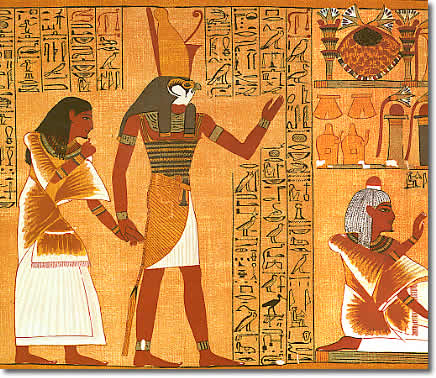
Ancient Egypt
Ancient Egypt was a civilization in the Northeast of Africa. It was concentrated along the lower reaches of the Nile River, in what is now the modern country of Egypt.
Egyptian civilisation coalesced around 3150BC.
The history of ancient Egypt occurred in a series of stable Kingdoms, separated by periods of relative instability, known as intermediate periods, these periods consisted of; the Old Kingdom of the Early Bronze age, the Middle Kingdom of the Middle Bronze age and then the New Kingdom of the Bronze age.
Egypt reached the pinnacle of its power during the New Kingdom, during the Ramesside period.
Egypt was invaded and conquered by several foreign powers, such as; the Libyans, Nubians, Assyria, Babylonia, Persian rule and Greece, in the third intermediate period of Egypt and late period. In the aftermath of Alexander the greats death one of his generals, Ptolemy Soter, established himself as the new ruler of Egypt. This Ptolemaic Dynasty lasted in Egypt until 30BC, when it fell to the Roman Empire and became a Roman province.

The success of ancient Egyptian civilisation came partly from its ability to adapt to the conditions of the Nile River Valley. The predictable flooding controlled irrigation of the fertile valley produced surplus crops. With resources to spare, the administration sponsored mineral exploitation of the valley and surrounding regions this lead to the early development of an independent writing system and the organisation of collective construction and agricultural projects, this of course lead to trading with surrounding regions and a military intended to defeat foreign  enemies and assert Egyptian dominance.
Motivating and organising these events was down to a bunch of selected and elite scribes who were religious leaders and administrators under the control of a Pharaoh, who ensured the cooperation and unity of the Egyptian people in the context of an elaborate system of religious beliefs.

The Egyptians achieved a great many things such as the surveying and construction techniques used to facilitate the building of monumental pyramids, temples and obelisks. They also used a system of mathematics, a practical and effective system of medicine, and agricultural production techniques with the first known ships, Egyptian faience and glass technology with new forms of literature and the earliest known peace treaty with Hittites. Egypt has left a lasting legacy. Its art and architecture were widely copied and it antiquities carried off to far corners of the world. Its monumental ruins have inspired the imagination of travellers and writers for centuries.      

Cerny, J (1975). Egypt from the Death of Ramesses III to the End of the Twenty-First Dynasty' in The Middle East and the Aegean Region c.1380–1000 BC
http://en.wikipedia.org/wiki/Ancient_Egypt

Ancient Greece
Ancient Greece was a civilization belonging to a period of Greek history that lasted from the Archaic period of the 8th to 6th centuries BC to the end of antiquity in 600 AD. Immediately following this period was the beginning of the Early Middle Ages and the Byzantine era. Included in Ancient Greece is the period of Classical Greece, which flourished during the 5th to 4th centuries BC. Classical Greece began with the repelling of a Persian invasion by Athenian leadership. Because of conquests by Alexander the Great, Hellenistic civilization flourished from Central Asia to the western end of the Mediterranean Sea.

Classical Greek culture, especially philosophy, had a powerful influence on the Roman Empire, which carried a version of it to many parts of the Mediterranean region and Europe, for which reason Classical Greece is generally considered to be the seminal culture which provided the foundation of modern Western culture.

The historical period of ancient Greece is unique in world history as the first period attested directly in proper historiography, while earlier ancient history or proto-history is known by much more circumstantial evidence, such as king lists, and pragmatic epigraphy.

http://en.wikipedia.org/wiki/Ancient_Greece
Bruce Thornton, Greek Ways: How the Greeks Created Western Civilization, Encounter Books, 2002

Roman Empire
The Roman Empire was the post-Republican period of ancient Roman civilization, characterized by an autocratic form of government and large territorial holdings around the Mediterranean in Europe, Africa, and Asia. The 500-year-old Roman Republic had been destabilized through a series of civil wars. Several events marked the transition from Republic to Empire, including Julius Caesar's appointment as perpetual dictator in 44 BC.

The first two centuries of the Empire were a period of unprecedented stability and known as the Pax Romana otherwise known as the Roman Peace. It reached its greatest expanse during the reign of Trajan around 98–117 AD. In the 3rd century, the Empire underwent a crisis that threatened its existence, but was reunified and stabilized under the emperors Aurelian and Diocletian.
Christians then rose to power in the 4th century, during which time a system of dual rule was developed in the Latin West and Greek East. After the collapse of central government in the West in the 5th century, the eastern half continued as what would later be known as the Byzantine Empire.

Because of the Empire's vast extent and long endurance, the institutions and culture of Rome had a profound and lasting influence on the development of language, religion, architecture, philosophy, law, and forms of government in the territory it governed, particularly Europe, and by means of European expansionism throughout the modern world.

John Bagnell Bury, A History of the Roman Empire from its Foundation to the death of Marcus Aurelius
http://en.wikipedia.org/wiki/Roman_Empire

Middle Ages
The Middle Ages, also known as the Medieval period, is the period of European history in the 5th to the 15th centuries, normally marked from the collapse of the Western Roman Empire until the beginning of the Renaissance and the Age of Discovery. The mediaeval period thus is the mid-time of the traditional division of Western history into Classical, Medieval, and Modern periods; moreover, the Middle Ages usually is divided into the Early Middle Ages, the High Middle Ages, and the Late Middle Ages.

In the Early Middle Ages, depopulation, deurbanization, and barbarian invasions continued apace. The barbarian invaders formed new kingdoms in the remains of the Western Roman Empire. In the 7th century North Africa and the Middle East became an Islamic Empire after conquest by Muhammad's successors. Although there were substantial changes in society and political structures, the break with Antiquity was not complete. The Eastern Roman Empire survived and remained a major power. Most of the new kingdoms incorporated many of the extant Roman institutions, while monasteries were founded as Christianity expanded in Western Europe. In the 7th and 8th centuries, the Franks established an empire covering much of western Europe; the Carolingian Empire endured until the 9th century, when it succumbed to the pressures of invasion from; the Vikings from the north, the Magyars from the east, and the Saracens from the south.

During the High Middle Ages, which began after AD 1000, the population of Europe increased greatly as technological and agricultural innovations allowed trade to flourish and crop yields to increase. Manorialism, which is the organization of peasants into villages that owed rent and labor services to the nobles, and feudalism, the political structure whereby knights and lower-status nobles owed military service to their overlords, in return for the right to rent from lands and manors, were two of the ways society was organized in the High Middle Ages. Kingdoms became more centralized after the breakup of the Carolingian Empire. The Crusades, first began in 1095, were military attempts, by western European Christians, to regain control of the Middle Eastern Holy Land from the Muslims, and succeeded long enough to establish Christian states in the Near East. Intellectual life was marked by scholasticism and the founding of universities; and the building of Gothic cathedrals, which was one of the outstanding artistic achievements of the High Middle Ages.

The Late Middle Ages were marked by difficulties and calamities, such as famine, plague, and war, which much diminished the population of Western Europe, in the four years from 1347 through 1350, the Black Death killed approximately a third of the European population. Controversy, heresy, and schism within the Church paralleled the warfare between states, the civil war, and peasant revolts occurring in the kingdoms. Cultural and technological developments transformed European society, concluding the Late Middle Age and beginning the Early Modern period.

Bauer, Susan Wise (2010). The History of the Medieval World: From the Conversion of Constantine to the First Crusade
Wickham, Chris (2009). The Inheritance of Rome: Illuminating the Dark Ages 400–1000
http://en.wikipedia.org/wiki/Middle_Ages

Tuesday, 9 October 2012

Strange Times and Places in the DC Universe

In Elseworlds, hero's and villains are taken from their usual, familiar settings and thrust into alternative worlds, divergent timelines, or parallel realities. Some are strange forgotten times that have existed or histories that might have been. Others are places that can't, couldn't or shouldn't exist. Origins begin at divergent points and the outcomes of major crises may vary dramatically and in all these imaginary stories made real, it all begins with  the question, 'What if...?'

Wonder Woman: Amazonia
In another reality, Diana is stolen away from paradise by Steve Trevor and the Royal Air Marines of the 19th-century British Empire. Forced to marry the vile Trevor, Diana becomes the star of a London show, re-enacting tales of heroic women immortalized in the Bible. She shows herself to be a true heroine, freeing oppressed women all over the Empire, from the terrible reign of King Jack Planters, alias Jack the Ripper.


Kingdom Come
This futuristic, apocalyptic tale begins in the Kansas wheat fields. A battle between the Justice Battalion and the villain Parasite results in Captain Atom's death and his nuclear energies lay waste to America's heartland. As a disillusioned Superman retreats into seclusion, a new generation of meta-humans, the uncontrollable sons and daughters of the world's greatest superheroes, inherits the Earth. Unfortunately without Superman and his contemporaries to guide them, these super-menaces might well herald Armageddon. As witnessed by a holy man and his spiritual guide, the Spectre, Superman must embrace his role as leader and unite the divided super-heroes lest his adopted world be torn asunder. The fate of all mankind is in the balance.


The Dark Knight Returns
Batman has retired, leaving Gotham in need of a hero as the Mutants, a nihilistic street gang, threaten to overrun the city. When Harvey Dent returns to his old criminal ways as the deranged two-face, the Dark Knight returns with a new Robin, teenager Carrie Kelly, flying at his side. Desperate times call for desperate measures and a darker Caped Crusader takes back Gotham City street by street, battling the Joker one last time. In 'Crime Alley,' Batman makes his final stand against his enemies, the Last Son of Krypton chief among them, as man and Superman decide the Dark Knight's destiny.


Last Son of Earth
Rocketed to distant Krypton from the dying planet Earth, baby Clark Kent is adopted by the scientist Jor-El and renamed Kal-El. Clad in a cumbersome exoskeleton to counter Krypton's oppressive gravity, Kal-El's discovery of a dead Green Lantern's power ring frees him to walk unfettered upon Kryptonian soil before journeying to the planet of his birth in search of his origins. There, amid the ragtag survivors of the blasted world, Clark meets the love of his life, Lois Lane and his greatest foe, Lex Luthor.


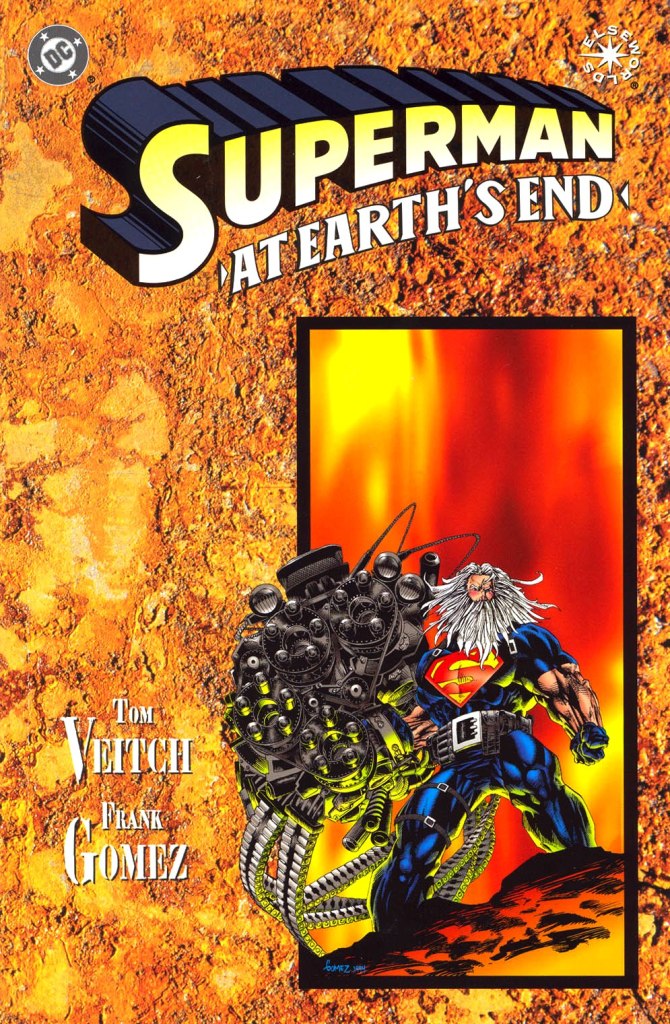
At Earth's End
Welcome to the Earth after disaster. It is one year since a bearded and remarkably long-lived Superman helped the young humans Kamandi, Saphira, Sleeper Zom, and the cyborg Ben Boxer to defeat the maniacal Mother Machine, cause of Earth's second apocalypse. When Boxer targets Gotham City for destruction, Superman flies to Batman's old stomping ground armed to the teeth to aid a band of youths and free the remains of Bruce Wayne, alias Batman, from the DNA Dictators.


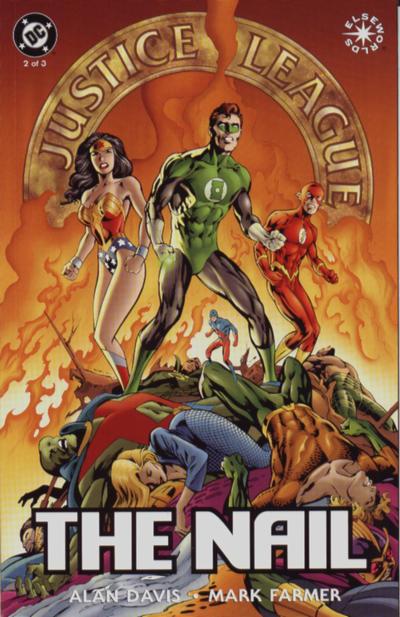
JLA: The Nail
Imagine a world without the Man of Steel. On an Earth resembling the DC Universe in every way, with all it's requisite heroes and villains save one, for want of a nail Superman was lost. When infant Kal-El's rocket plummeted to Earth, Jonathon and Martha Kent missed their fateful rendezvous with the Last Son of Krypton because of a flat tire...all for want of a nail. Instead Kal-El was adopted by  an Amish family and never ventured forth from his rural backwater to become a hero. That is, until an evil regime outlawed all meta-humans and tried too drive the planet's heroes into imprisonment or extinction. The plains of Kansas become the scene of the final battle between a power-mad Jimmy Olsen and what remains of the world's greatest super  heroes.


Superman: Red Son
What if Kal-El of Krypton had landed on an agricultural collective in the Soviet Union rather than a farm in Kansas? Earth's greatest hero would fight for truth, justice and the Russian way of life as the Soviet's most powerful secret weapon. What follows is an arms race of unparallel intensity as the U.S. commissions it's greatest scientist, the brilliant Lex Luthor, to tilt the balance of power in America's favour. The world stands on the brink of annihilation as Superman assumes leadership of the Soviet Union, bidding to unite the planet under communism.


Bloodstorm
In a Gotham City where vampires rule the underworld, Batman is a bloodsucking monster who hunts those like him. Sating his own bloodlust to cleanse Gotham, Batman finds his undead foes united by the Clown Prince of Crime. Batman's only ally is doomed were, Catwoman Selina Kyle. One-by-one, Batman slays his immortal foes and bathes Gotham in red rain until only one is left. In the end, the Dark Knight knows that the killing might begin anew if a single vampire remains. Commissioner Gordon and Alfred have little choice but to drive a stake through the heart of Batman, bringing him the peace he has long sought.


Sunday, 7 October 2012

Villains


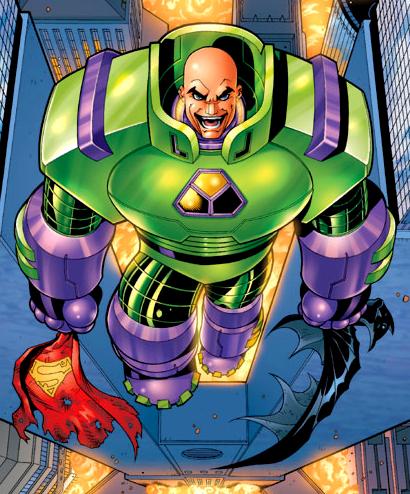
-Lex Luthor
Lex Luthor's first appearance arrived in ACTION COMICS #23 (April 1940). Luthor's full name is Alexander Joseph Luthor.
Luthor's physical description is 6ft 2in, weighing 210lbs with green eyes and no hair.
Lex's abilities are; He is one of the smartest men on Earth, able to invent technological marvels or manipulate entire nations. He believes in brute force and is an unskilled fighter relying on weapons and armour.
Lex Luthor may be the most gifted man alive but instead of using his supreme intellect and skills for the better of mankind, the sociopath has continually sought power and influence without regard for the pain and suffering he causes. The gifts are also wasted on his single-minded hatred of a more pure and noble man, especially given his alien origins.

-Joker
Joker's first appearance was in BATMAN #1 (1940).
Joker's real name is unknown as it has never been mentioned in any of the comics.
His physical description is described as; 6ft 5in, weighing 192lbs with green eyes and green hair.
The Joker's special abilities; though not especially strong or skilled in fighting, the joker is nonetheless a deadly combatant. Previously he has demonstrated adeptness at chemistry, concocting his own poisonous Joker Venom, a weapon of mass distraction that leaves it's victims with a death-rictuses resembling his own maniacal leer. The Joker often wields deadly joke props or gags such as an acid-squirting flower or BANG! proclaiming flag pistol that doubles as a spear gun. However, he also plays the straight man in his blackly comedic campaign of terror and will use conventional weapons.
The Joker is undeniably the most dangerous and unpredictable foe Batman has ever encountered. He literally reinvents himself each morning, concocting deadly new laugh-riots to bedevil the Dark Knight and his allies. While safely confined within the impregnable wall of Arkham Asylum for the Criminally Insane, the Joker has spun investigating psychiatrists various yarns concerning his troubled origins. Most of his tales can be dismissed, but few fats remain that give some insight into how this leering lunatic came into being.
  
-Harley Quinn
Harley's first appearance was in BATMAN: HARLEY QUINN #1 (October 1999).
Quinn's real name was DR. Harleen Quinzel.
Her physical description is; 5ft 7in, weighing 140lbs with blue eyes and blonde hair.
Harley's abilities consist of; her being an agile acrobat following exposure to Poison Ivy's herbal remedies, once a gifted psychotherapist she is now dangerously unbalanced, like the Joker, often employs various gag weapons in her bag of tricks.
Encountering the Joker was the very worst thing that could have happened to young and impressionable Arkham Asylum psychiatrist Dr. Harleen Quinzel. While attempting to heal the Joker's maniacal mind, Quinzel found herself captivated. As he spun heartrending, and probably false tales of an unhappy childhood, she was soon falling head over heels in love with him.


-Doomsday
Doomsday’s very first appearance was in SUPERMN: THE MAN OF STEEL #17 (November 1992).
Doomsday has no other alias.
His physical description is 7ft, weighing 615lbs with red eyes and white hair.
Doomsday’s special abilities consist of; him being built to be the ultimate killing machine, each time he is defeated he regenerates with a higher level of strength and endurance, making him an unbeatable foe.
250,000 years ago an alien scientist named Bertron arrived on Krypton and commenced cloning experiments to create the perfect warrior. Within decades a cloned baby proved able to survive on harsh Krypton and withstand local predators. Turning on its creator the creature killed Bertron before escaping Krypton. The monster travelled to other worlds, where it killed without mercy. Through the years members of the Green Lantern Corps opposed this being known as Doomsday until it threatened Oa. Radiant defeated Doomsday and he was chained up in a protective garment placed in a container and then ejected into space. The container crashed into the Earth, burying itself deep underground. Over the millennia Doomsday struggled to free himself, pounding his way to the surface until he emerged in North America. He beat back the Justice League of America before confronting Superman in Metropolis. The two fought an epic battle that laid waste to the city and resulted in the death of the Man of Steel. Since then Doomsday has remained unstoppable, although he has since become a pawn for the likes of Brainiac and even Lex Luthor.
 
-Darkseid
Darkseid's first appearance was in SUPERMAN'S PAL JIMMY OLSEN #134 (December 1970).
Darkseid's real name is Uxas.
His physical appearance is described at 8ft 9in, weighing 1,815lbs with red eyes and no hair.
Darkseid's abilities are; utterly ruthless, unforgiving planetary overlord who rules underlings by fear, immensely strong and apparently invulnerable, his eyes project Omega Beams, powerful rays that incinerate, annihilate or transport beings.
Darkseid is the gravest threat to life in the DC Universe, representing all that is vile and corrupt. In the wake of the old gods dying, a race of NEW GODS were born, split between two planets, bring New Genesis and smouldering Apokolips, who were continually at war with each other. On Apokolips, Queen Heggra and her own son Uxas plotter and schemed against each other, one determined to retain power, the other seeking it. Uxas's drive for control resulted in his brother Drax's death, Uxas then evolved into the creature known as Darkseid.  

-Scarecrow
Scarecrow first appeared in WORLD'S FINEST COMICS #3 (Fall 1941).
Scarecrows true identity is Jonathan Crane.
Crane's appearance is described; 6ft, weighing 150lbs with blue eyes and brown hair.
Scarecrow's abilities; come from him being a psychologist and biochemist, Crane used his knowledge to create a fear-inducing gas that creates nightmarish hallucinations in the mind of anyone who inhales it, costume also designed to strike terror and he is a manic hand-to-hand combatant.
Jonathan Crane was often the physical and emotional target of neighbourhood bullies. Initially frightened by their horrible taunts, Crane eventually decided he would turn the tables on his attackers and he began voraciously studying phobias and the nature of fear.  


-Mister Freeze
Freeze's first appearance was in BATMAN #121 (February 1959).
Mister Freeze's true identity is Victor Fries.
Victor's physical appearance is described at 6ft, weighing 190lbs with icy blue eyes and white hair.
Victor's abilities consist of; him having a vast intellect, but has subsumed it in favour of brute force, using his Freeze Gun and super-cooling armour to get what he wants.
Describing Victor Fries as cold-hearted is just the tip of the iceberg. To escape the pressures of his brutal father, young Victor developed an unusual hobby; freezing animal. He thought he was preserving his pets forever but his father saw things otherwise and sent the boy for counselling. The psychiatrist viewed this freezing tendency as Victor's way of controlling his world. Isolated and ridiculed at school and college, Victor believed he would never know the warm touch of humanity then came Nora, the beautiful athlete who stole his heart. They married and when his beloved was stricken with a rare malady, Fries left his teaching post to work for drugs company Gohcorp, hoping their technology would help him find a cure. Exposure to a hail of super-coolants altered his body chemistry and the brilliant cryogenicist now wears a suit of air-conditioned armour to remain comfortably chilled.

-Captain Boomerang
Captain Boomerang's first appearance was in FLASH #117 (December 1960).
Boomerang's real name was George Harkness.
Physical description 5ft 9in, weighing 16lbs with brown eyes and brown hair.
Boomerang's abilities consist of; him being a boomerang-throwing expert, he has developed numerous boomerangs with specific functions.
Captain Boomerang II then appeared in IDENTITY CRISIS #3 (October 2004).
This Boomerang's real name was Owen Mercer.
Physical appearance is 6ft 1in, weighing 190lbs with grey eyes and red hair.
Boomerang II had abilities skilled with boomerangs and other thrown weapons and he can temporary generate bursts of super-speed.
A native of Australia, George 'Digger' Harkness was sent as a young adult to the U.S. by his mother, who was desperate to get her son away from his stepfather. He took a job demonstrating boomerangs for the Wiggins Game Company. Harkness, who had become an expert from years of throwing the wooden device as a kid, was given a uniform and the name Captain Boomerang. While demonstrating the boomerang to kids, Harkness liked to line his pockets with a spot of pilfering. This brought him into conflict with the second Flash, whom Harkness opposed as Captain Boomerang with a variety of ever more bizarre boomerang gadgets. After the Flash's death, Captain Boomerang served on the government-sponsored 'Suicide Squad.' However, he missed the thrill of stealing and secretly became Mirror Master II. After the squad temporarily folded, Captain Boomerang returned to a life of crime in Central City, opposed by Flash III. He died during the Identity Crisis event, shot by Robin's father. His son Owen Mercer has since taken up the identity of Captain Boomerang.